In contemporary electronics and embedded system design, versatility and measurement capability are decisive factors in determining project success. Engineers and advanced hobbyists increasingly rely on modular control interfaces, compact computing platforms, and structured data acquisition frameworks to bridge the gap between physical phenomena and digital analysis. Whether the objective is real-time control, environmental monitoring, or simulation fidelity, the underlying requirement remains consistent: reliable interaction between hardware inputs, processing logic, and actionable outputs.
Devices such as PoKeys57E illustrate how configurable input-output controllers can serve as adaptable foundations for custom systems. In parallel, the rc simulator interface demonstrates how physical user controls can be translated into meaningful digital signals for simulation environments. Meanwhile, a Raspberry Pi temperature logger represents the practical application of embedded computing for continuous environmental data collection. Complementing these solutions are DAQ devices, which formalize the process of capturing, conditioning, and analyzing real-world signals in structured, measurable form.
Although these topics span different application domains, they share a common technical thread. Each involves signal acquisition, processing integrity, and deterministic communication between components. Understanding how these systems function individually provides insight into a broader engineering principle: accurate data capture and interface design are prerequisites for dependable system behavior. The following chapters examine each subject in detail, presenting precise explanations grounded in practical implementation.
What Is PoKeys57E and How Is It Used in Advanced Control Applications?
Vsebina
- What Is PoKeys57E and How Is It Used in Advanced Control Applications?
- What Is an RC Simulator Interface and How Does It Translate Control Inputs Accurately?
- What Is a Raspberry Pi Temperature Logger and How Is It Implemented Effectively?
- What Are DAQ Devices and Why Are They Central to Measurement Systems?
- Conclusion
PoKeys57E is a network-enabled input and output controller designed to provide flexible, high-density interfacing between digital systems and external hardware. Unlike simpler USB-based interface boards, PoKeys57E integrates Ethernet connectivity, allowing it to operate as a distributed device within a local network. This capability positions PoKeys57E as a practical solution in applications where physical distance, scalability, or remote accessibility must be considered from the outset.
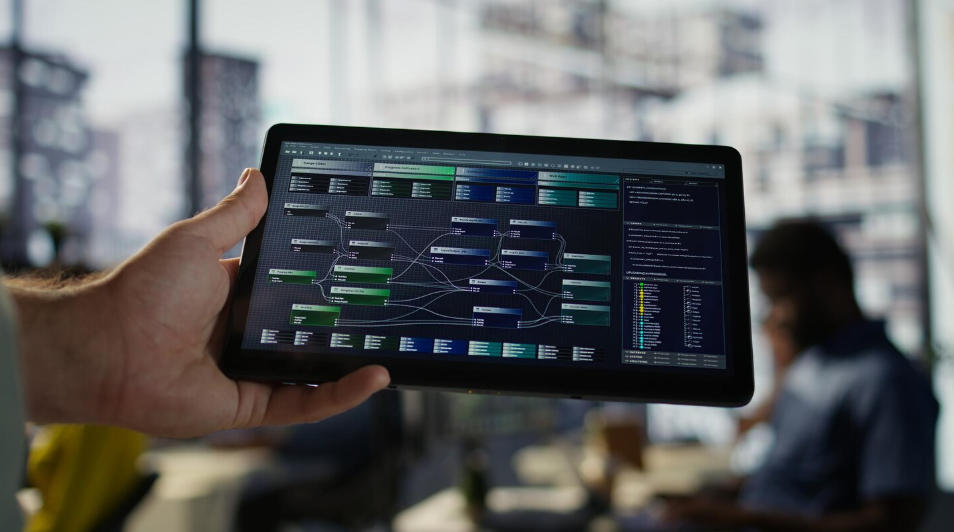
At a functional level, PoKeys57E offers a substantial number of configurable digital inputs and outputs, along with support for analog signals and various peripheral functions. Each channel can be assigned a specific role through configuration software, enabling PoKeys57E to adapt to a wide range of control requirements. Switches, encoders, sensors, relays, and indicators can be connected directly to the device, with PoKeys57E managing signal conditioning and communication with supervisory systems.
The Ethernet capability of PoKeys57E is particularly significant. By operating over standard network infrastructure, PoKeys57E can be deployed in distributed architectures where centralized control software communicates with multiple interface modules. This reduces cable complexity and enhances system modularity. In industrial or laboratory environments, PoKeys57E may serve as a remote I/O node, transmitting state changes and receiving commands in real time with deterministic performance characteristics.
Another defining feature of PoKeys57E is its configurability without extensive custom firmware development. Through structured software tools, users can define logic behavior, input mapping, and communication parameters. This reduces development overhead while preserving flexibility. PoKeys57E therefore bridges the gap between fixed-function hardware and fully custom embedded designs.
In advanced control applications, PoKeys57E often acts as a foundational hardware layer. It provides stable electrical interfacing while allowing higher-level software to implement decision-making logic. By separating hardware signal management from application logic, PoKeys57E supports maintainable system architecture and future expansion. Its combination of network integration, input-output density, and adaptable configuration ensures that PoKeys57E remains relevant in both prototyping environments and long-term installations requiring reliable digital interfacing.
What Is an RC Simulator Interface and How Does It Translate Control Inputs Accurately?
An rc simulator interface is a hardware intermediary that connects radio control transmitters or dedicated controller hardware to simulation software. Its primary function is to convert analog or digital signals generated by joysticks, throttle sticks, switches, and potentiometers into standardized data formats recognizable by a computer. The rc simulator interface ensures that physical movements of control elements are faithfully represented within a simulated environment, preserving proportionality, timing, and responsiveness.
At a technical level, an rc simulator interface samples control signals with sufficient resolution to maintain smooth input transitions. In traditional radio control systems, signals may be transmitted as pulse-width modulation or serial data streams. The rc simulator interface decodes these signals and maps them to digital input channels that simulation software interprets as control axes or discrete commands. Accuracy in this translation process is critical, as even minor inconsistencies can degrade realism and impair training effectiveness.
Latency management is another defining characteristic of a well-designed rc simulator interface. Simulation fidelity depends not only on resolution but also on response time. The rc simulator interface must process input changes with minimal delay, ensuring that simulated aircraft or vehicle reactions correspond closely to the user’s physical movements. Excessive latency disrupts coordination and reduces the training value of the simulation.
Calibration capabilities further distinguish a robust rc simulator interface. Because mechanical components may vary slightly in output range or center position, the rc simulator interface typically supports configuration adjustments. These allow the user to define neutral points, travel limits, and sensitivity curves. Proper calibration ensures linear and predictable control behavior across the full range of motion.
In advanced setups, the rc simulator interface may also provide bidirectional communication, supporting feedback signals or integration with auxiliary devices. However, its core responsibility remains consistent: precise and stable signal conversion. By acting as a structured translation layer between physical transmitters and digital simulation platforms, the rc simulator interface enables realistic interaction and disciplined control response within virtual training environments.
What Is a Raspberry Pi Temperature Logger and How Is It Implemented Effectively?
A Raspberry Pi temperature logger is an embedded monitoring system built around a Raspberry Pi single-board computer, designed to record temperature measurements over time with structured storage and analysis capability. Its purpose is not merely to display instantaneous readings, but to capture continuous environmental data in a reliable, timestamped format suitable for long-term evaluation. By combining low-cost computing hardware with digital sensors, a Raspberry Pi temperature logger provides a scalable and adaptable monitoring platform.
At the hardware level, a Raspberry Pi temperature logger integrates one or more temperature sensors connected through GPIO, I²C, SPI, or 1-Wire interfaces. The Raspberry Pi functions as both data acquisition unit and processing node. It periodically queries the sensors, retrieves temperature values, and associates them with precise time references. This structured data collection is central to the operation of a Raspberry Pi temperature logger, as temporal accuracy determines analytical usefulness.
Software implementation defines the effectiveness of the Raspberry Pi temperature logger. Scripts written in Python or similar languages typically manage sensor polling intervals, error handling, and data storage. Readings may be saved locally in CSV files or databases, or transmitted to remote servers for centralized monitoring. The flexibility of the Raspberry Pi platform allows the temperature logger to evolve from a standalone device into part of a larger monitoring network.
Reliability considerations are critical. A properly configured Raspberry Pi temperature logger incorporates safeguards against power interruptions, corrupted storage, and sensor disconnection. Logging intervals must be selected carefully to balance resolution with storage efficiency. For applications such as laboratory monitoring, greenhouse control, or server room supervision, consistent uptime and data integrity are non-negotiable.
The strength of a Raspberry Pi temperature logger lies in its adaptability. It can be expanded with additional sensors, integrated with alert systems, or paired with visualization dashboards. By transforming raw temperature readings into structured datasets, the Raspberry Pi temperature logger enables evidence-based decisions and long-term environmental analysis. In practical terms, it demonstrates how compact embedded computing can deliver dependable measurement infrastructure without excessive complexity.
What Are DAQ Devices and Why Are They Central to Measurement Systems?
DAQ devices, or data acquisition devices, are hardware systems designed to capture, condition, digitize, and transmit physical signals for analysis and control. Their primary function is to convert real-world phenomena such as voltage, current, temperature, pressure, or vibration into structured digital data that can be processed by software. In engineering practice, DAQ devices form the foundation of any system where measurement accuracy and repeatability are required.
At a structural level, DAQ devices consist of input channels, signal conditioning circuitry, analog-to-digital converters, and communication interfaces. Signal conditioning ensures that raw sensor outputs are amplified, filtered, or isolated appropriately before digitization. The analog-to-digital converter then translates continuous signals into discrete values with defined resolution and sampling rate. The quality of DAQ devices is largely determined by their precision, noise immunity, and synchronization capabilities.
Sampling strategy is central to the performance of DAQ devices. High-speed applications, such as vibration monitoring or dynamic motion analysis, demand rapid sampling with minimal latency. Conversely, environmental logging applications may prioritize long-term stability over speed. DAQ devices are therefore specified according to bandwidth, resolution, and channel count, ensuring alignment with the intended measurement objective.
Integration flexibility further distinguishes modern DAQ devices. They may connect via USB, Ethernet, PCIe, or industrial communication protocols, enabling deployment in laboratory, industrial, or field environments. In distributed systems, DAQ devices can operate as remote nodes, transmitting synchronized datasets to centralized processing platforms. Deterministic communication and timestamp accuracy are essential where multi-channel correlation is required.
In essence, DAQ devices formalize the process of measurement. They provide a structured interface between sensors and analytical software, ensuring that captured data is consistent, traceable, and suitable for decision-making. Whether used in research laboratories, industrial diagnostics, or embedded monitoring solutions, DAQ devices underpin reliable system evaluation and control.
Conclusion
The technologies examined demonstrate the interconnected nature of modern measurement and control systems. PoKeys57E offers a configurable network-based interface for structured input and output management. The rc simulator interface translates physical control signals into digital commands with precision and minimal latency. A Raspberry Pi temperature logger illustrates how embedded computing platforms can provide reliable environmental monitoring. DAQ devices, in turn, generalize the discipline of signal acquisition, ensuring that physical phenomena are captured accurately and consistently.
Each of these systems reflects a core engineering principle: dependable performance depends on disciplined signal handling. Interfaces must translate accurately. Logging systems must record consistently. Acquisition hardware must preserve integrity from sensor to software. When these elements function cohesively, they enable reliable analysis, simulation, and control.
In contemporary engineering environments, success is rarely defined by isolated components. It is determined by how effectively interfaces, logging platforms, and DAQ devices integrate into a coherent architecture. Precision at the signal level ultimately defines stability at the system level.